Videos

StaBlox build demonstration:
stacking a flue gas tunnel by hand

Blasch engineers assemble a StaBlox flue gas tunnel from its interlocking precast parts.

No trowel, no mixer, no curing time.
Just blocks that only fit one way.

Precast tunnel wall being built block by block in a furnace
In short

In the StaBlox build demonstration, Blasch engineers assemble a section of a StaBlox reformer flue gas tunnel by hand to show how the interlocking blocks stack into place. The parts go together dry, without mortar and without curing, and the tongue and groove joints locate each block, which makes the build quicker and more repeatable than laying brick and mortar.

What the video shows

The demonstration follows the order in which a tunnel is built in the furnace:

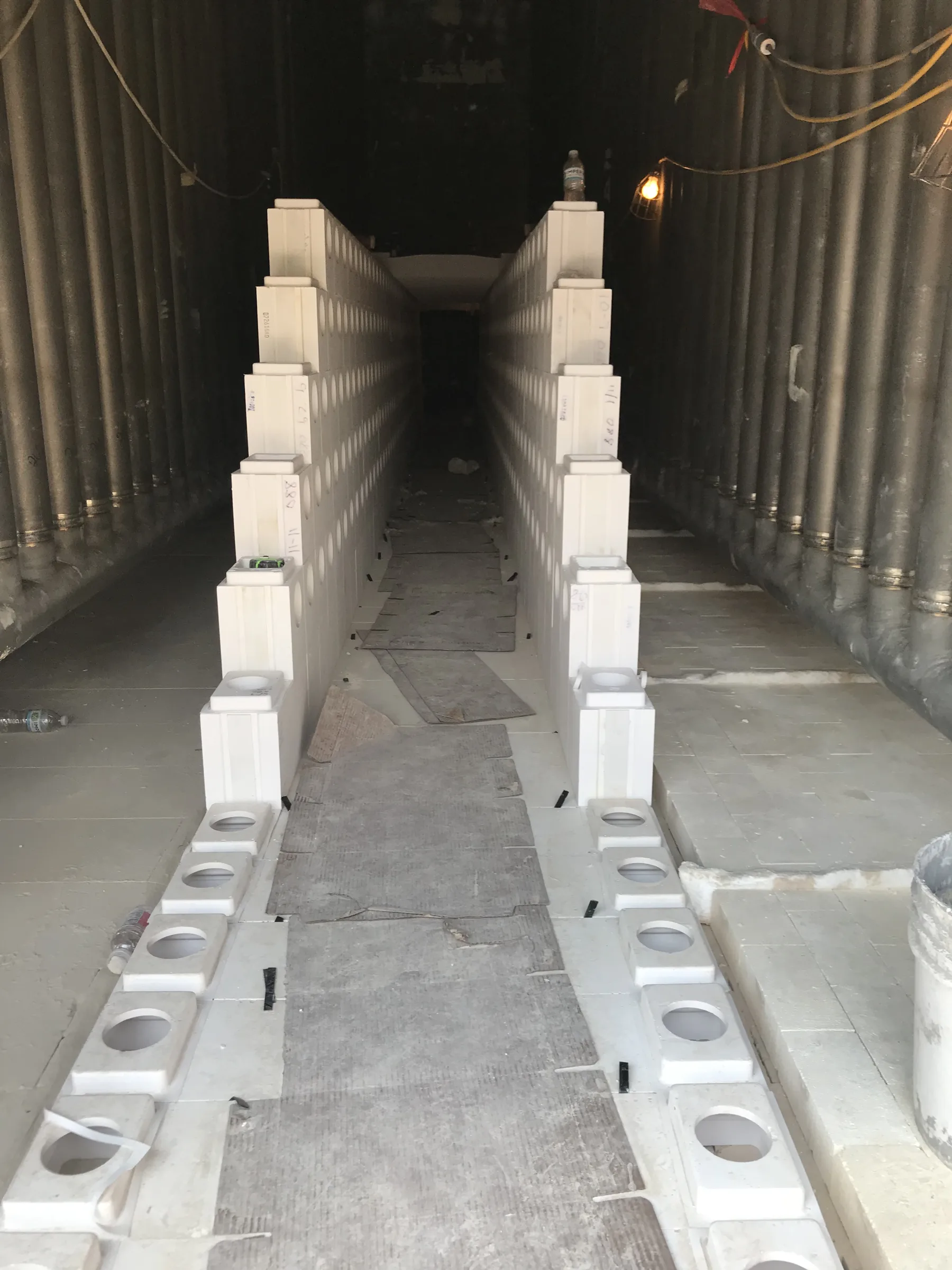
  1. Base blocks are laid first. They span the tunnel floor and set the spacing of the two walls.
  2. Hollow side wall blocks are stacked on the base, with a fiber seal between blocks and courses.
  3. Lids close the top. Their shiplap joint stops gas from bypassing the openings and ties the wall tops together.
  4. Where the tunnel is tall relative to its width, tie rods connect the walls and lock with a quarter turn.
  5. Orifice inserts lock into the wall openings according to the opening plan.

Why the parts are easy to handle

Each side wall block weighs under 50 lb and replaces about six bricks, so one person can carry and set it. There is no cutting on site and no masonry skill involved, and the components arrive fired, ready to use.

What you see between the blocks

The gaps you see between the cold blocks are not a defect, they are the expansion allowance of the whole tunnel, spread over every joint instead of a few expansion joints that a brick wall outgrows.

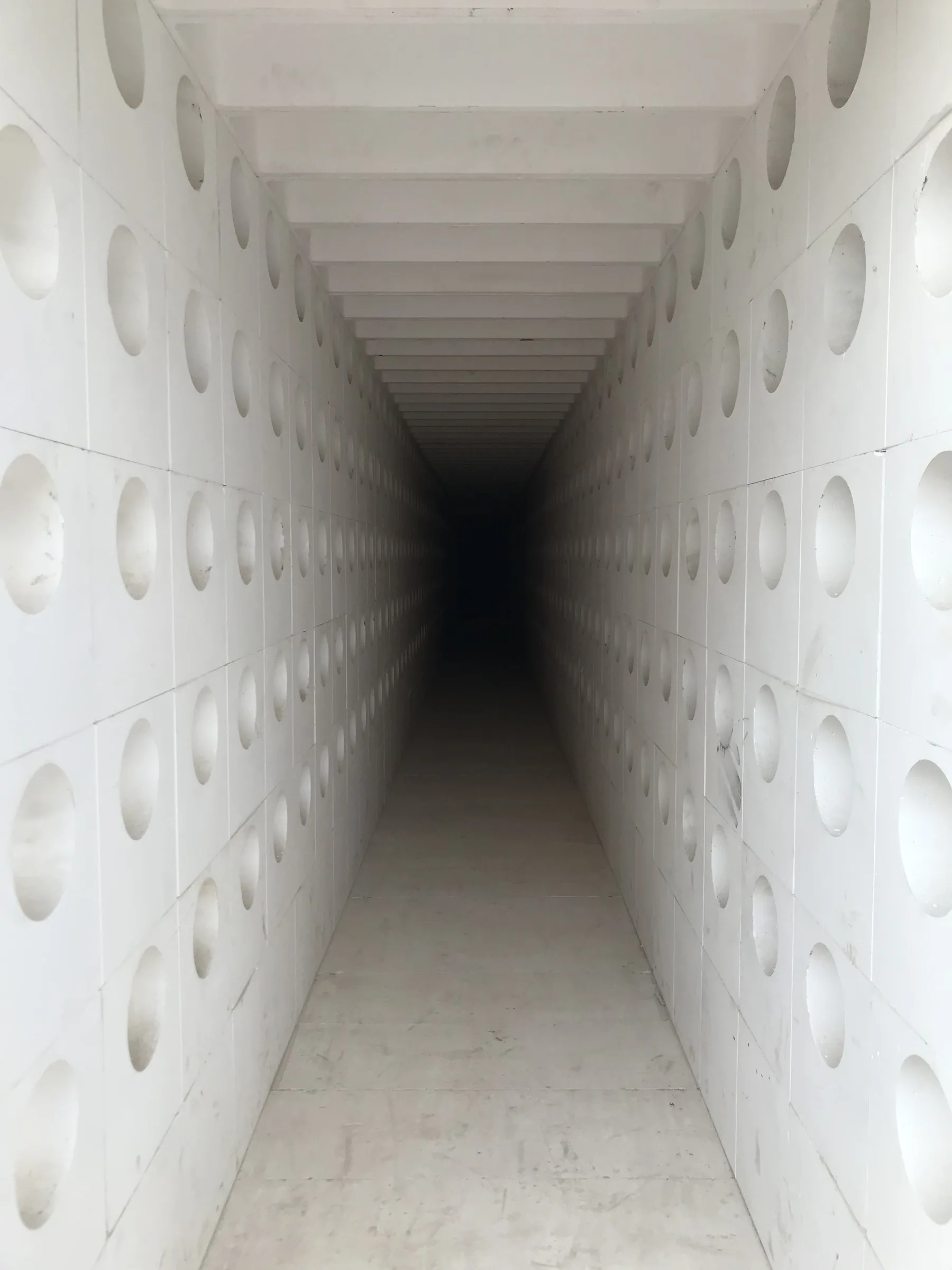
Inside a finished precast flue gas tunnel with rows of round side openings

What you take away

The demonstration answers the first question most turnaround planners ask: who on the crew can build this? A general refractory crew can, because the blocks locate themselves and the opening plan tells them where each insert goes.

The design and field results are on the page for the StaBlox reformer tunnel system. The same parts in a working furnace appear in the StaBlox installation video, and the 3D animation compares the build with a brick tunnel.

Frequently asked

Questions about the build

Do we need refractory masons to build StaBlox?

No. The blocks are set dry by a general refractory crew. There is no mortar to mix and no curing time before heat up.

What holds the walls together without buttresses?

Tie rods between the walls, used where the tunnel is tall relative to its width. They lock with a quarter turn and can be removed.

Can the tunnel be taken apart again?

Yes. The system can be disassembled and rebuilt, for example for inspection or a later change of the opening plan.

Two precast tunnel walls on the floor of a reformer furnace during installation

Want your crew to see
the parts first?

Tell us about the reformer and the turnaround window. A Blasch engineer explains the build sequence for your tunnels.

Talk to an engineer Call