Technical Library

Partners in war:
the ceramic grades behind wear resistant parts

An overview of the ceramic grades and compositions Blasch has developed, and what separates them in service.

The shape fights the wear.
The composition decides whether it wins.
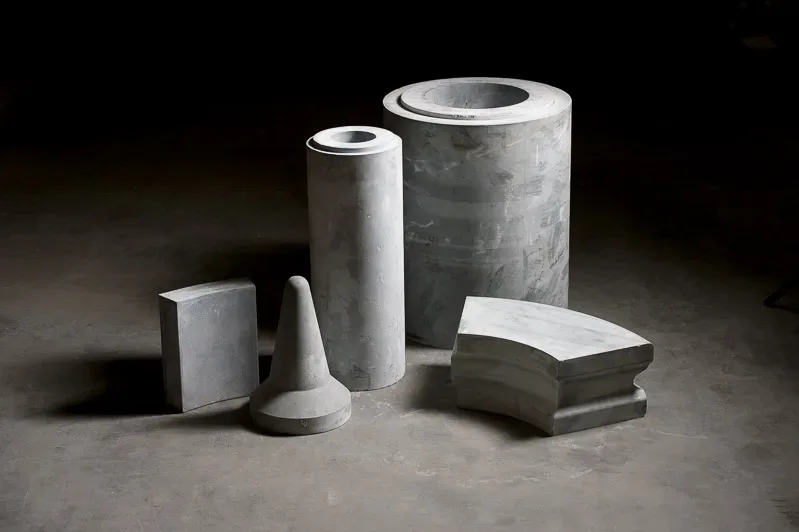
Cast nitride bonded silicon carbide shapes
In short

This Blasch article introduces the many ceramic grades and compositions Blasch has developed for wear and high temperature service. They range from high alumina and mullite to fused silica, zirconia and a family of bonded silicon carbides. The point for the engineer is that the name of the material says little on its own: the bond, the porosity and the way the part is formed decide how it behaves in a given application.

About this paper

  • Publisher: Blasch Precision Ceramics
  • Topic: ceramic grades and compositions for wear and heat
  • Full text: available on request; the full article was not available to us, so this page uses the published summary and the Blasch material list

Silicon carbide is a family

Seven silicon carbides with seven different bonds behave like seven different materials, so asking for silicon carbide is only the start of the specification.

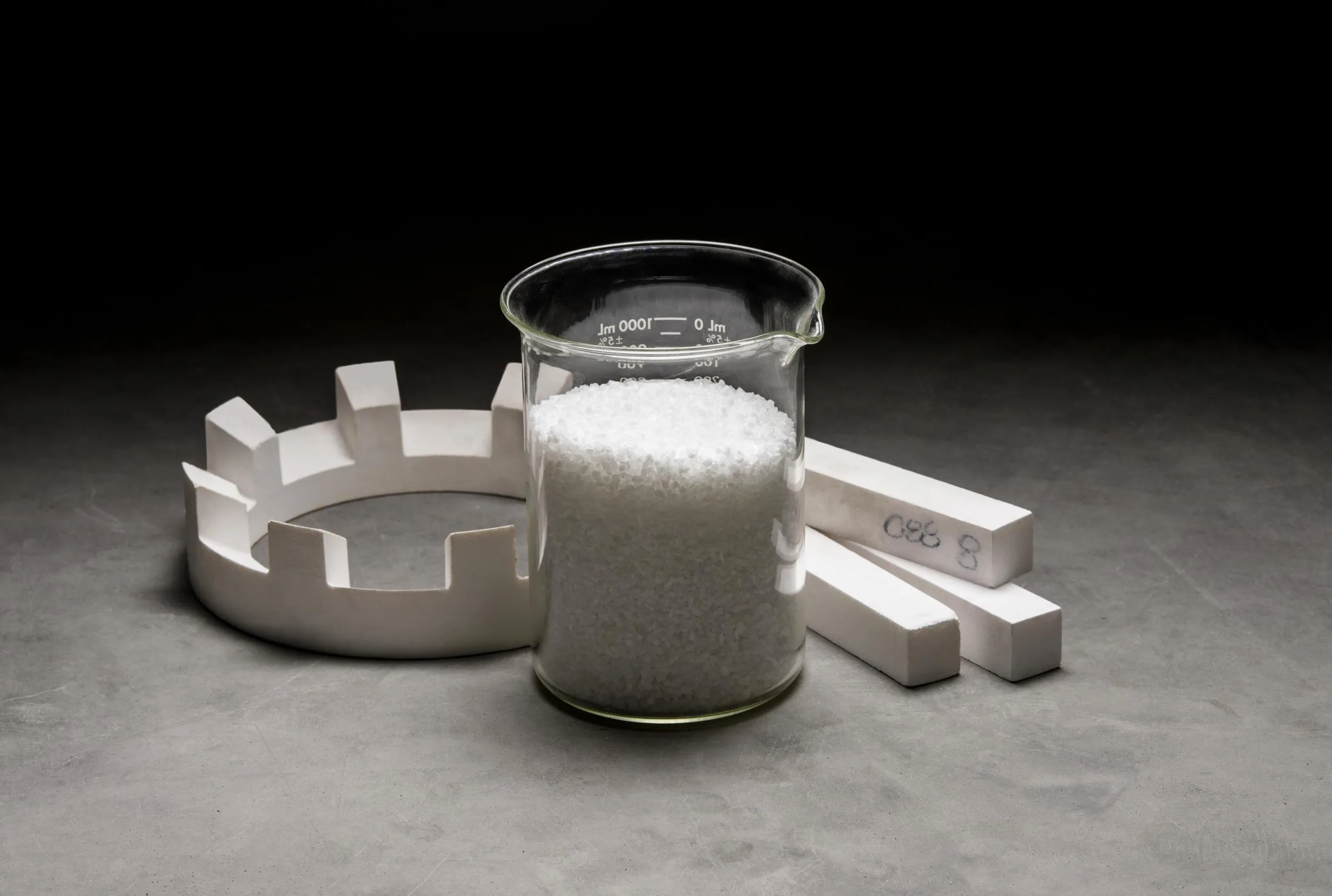
White alumina parts and alumina powder in a glass beaker

The oxide ceramics

High alumina (ProCaster): crucibles, tundishes and parts in contact with molten metal and high heat.

Alumina-mullite and mullite: creep resistant, for structural parts at high temperature such as checkerwall and tunnel blocks.

Fused silica: low thermal expansion, for parts that see sharp temperature changes.

Zirconia, zircon and composites: for the most corrosive melts.

More on alumina and the other oxides on the materials pages.

The silicon carbides

Blasch lists one family per bond:

  • Oxide bonded silicon carbide, OXYTRON
  • Nitride bonded silicon carbide, NITRON
  • Oxynitride bonded silicon carbide
  • Alumina bonded silicon carbide, ALTRON
  • Reaction bonded silicon carbide, InVinCer RB
  • Recrystallized silicon carbide, InVinCer Rx
  • Sintered silicon carbide, ULTRON

Silicon nitride (SINTRON) and aluminum titanate complete the list. The silicon carbide page explains where each bond fits.

How a grade is chosen

The choice follows the failure. Abrasion calls for hardness and density, thermal shock for a bond and pore structure that tolerate cycling, molten metal for non-wetting. Blasch tests candidates in house for thermal shock, abrasion to ASTM C704, acid resistance, creep and strength, see modeling and testing.

What this means for your part

Describe the failure, not only the part. The same elbow needs a different grade for cold ash than for hot catalyst. Related reading: Ceramics Win the War on Erosion.

Frequently asked

Questions about this paper

How many compositions has Blasch developed?

The company presentation states 110 mixes produced and more in development. That figure is from an older document and should be confirmed for today.

Are these grades used as coatings?

No. Every grade is cast as a solid part or liner.

Which grade is the hardest?

Dense silicon carbides are among the hardest, but hardness alone does not decide service life when the part also sees heat and thermal cycling.

Mullite shapes next to a beaker of raw material

Not sure which grade
your part needs?

Tell us how the part fails today. A Blasch engineer suggests the composition and how to test it.

Talk to an engineer Call